In 2025, the number of Hispanic and Latino homeowners in the U.S. reached a record high of 10.2 million. For housing professionals, reaching this growing audience requires more than simply making information available in Spanish. The experience itself needs to feel relevant and accessible.
At Framework, we believe language is part of the experience. That’s why we partnered with Latinx Copywriter to develop Spanish-language homeownership education, including custom courses for Pennsylvania Housing Finance Agency and Change Lending. Our approach goes beyond translation to create experiences that help Spanish-speaking homebuyers feel supported, informed, and confident. This year, Framework Educación para Compradores de Vivienda and Framework 365™ en Español comprised nearly 5% of all pre-purchase course enrollments.
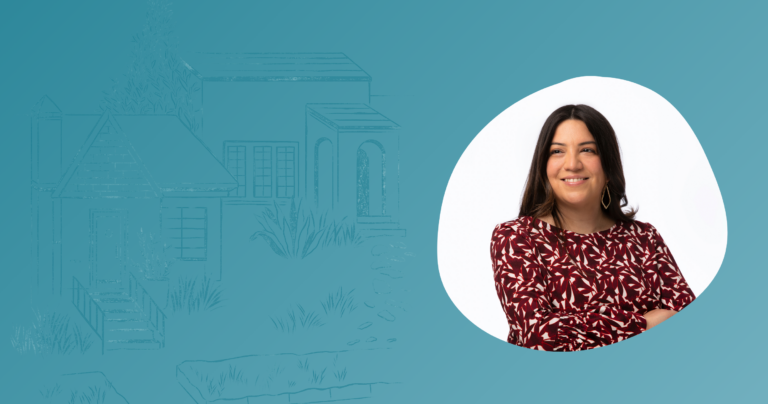
In the Q&A below, Sarah Estapa, Founder and Chief Creative Officer of Latinx Copywriter, explains what transadaptation looks like in practice and shares guidance for housing professionals seeking to create multilingual experiences.
Tell us a little about your background and how you came to specialize in bilingual copywriting between English and Spanish.
I’m a proud Tejana from the Rio Grande Valley in South Texas, where I grew up speaking English, Spanish, and Spanglish. Because I grew up so close to the Mexican border, I was blessed to live in one of the most unique bicultural bubbles in the United States, where both cultures and languages were simply part of everyday life. I even had friends from completely different cultural backgrounds who embraced that truly Tex-Mex environment! We grew up eating breakfast tacos, attending Friday night high school football games, and sharing pan dulce and barbacoa on Sundays. Little did I know that the small-town Texas life I assumed was completely normal was actually shaping me to one day help brands and agencies understand the beauty of cultural duality.
From the beginning of my copywriting career, I kept seeing the same thing. Spanish content was often treated as something to translate at the very end, instead of something that deserved the same thought and strategy as the English. That really stuck with me because being Hispanic is about so much more than speaking Spanish. Culture, family, geography, and each of our unique lived experiences shape how we communicate.
That’s a big part of why I created Latinx Copywriter. Today, I help brands communicate in English, Spanish, and Spanglish in a way that feels natural, respectful, and culturally relevant. Because somos más. We are more.
What is the difference between translation and transadaptation?
This is one of the biggest misconceptions we face as a bilingual and bicultural copywriting agency. The easiest way to understand the difference is to think about technical accuracy versus cultural connection. Think of it like the difference between a dictionary and a best-selling novel.
Translation asks, “How do you say popcorn in Spanish?”
A Spanish-English dictionary might tell you palomitas. But language is rarely that simple. There are many ways to say “popcorn” across Spanish-speaking countries and regions, and they can all be correct. So, the real question becomes: Who is your audience?
With transadaptation, also known as transcreation, we look at the full message. We’re no longer just asking, “What does popcorn mean in Spanish?” Let’s say we’re creating a regional campaign for Cinemark theaters in Texas. Now we start asking the questions any good copywriter would: What’s the tone? Whom are we speaking to? What do we want them to understand or feel? What language will sound most natural to them? Are there cultural or regional nuances we need to consider?
So, the goal really isn’t to translate a sentence word for word. It’s to craft a unique message that feels organic and makes the audience feel seen and heard. That means going beyond the technicalities of Spanish and shaping the message around culture, context, and the people we’re actually trying to reach.
What makes content “culturally relevant”?
At Latinx Copywriter, culturally relevant content starts with truly understanding the people you’re trying to reach. That means understanding their shared values and experiences, while also recognizing and celebrating what makes them unique.
It’s about authenticity. Are you reflecting the real lives of the people who support your brand? Do they see themselves, their families, their experiences, and their culture represented in a way that feels genuine?
Simply translating your existing marketing materials into Spanish doesn’t make them culturally relevant.
The Hispanic and Latino community is incredibly diverse. Someone who recently moved to the U.S. from Venezuela may communicate very differently from a third-generation Mexican American in Texas, a Puerto Rican family in Florida, or a bilingual Gen Z consumer in California.
And the data backs this up. A 2025 study from ThinkNow and LatiNation found that 67% of Hispanic Gen Z consumers value representation of shared values, lived experiences, and nuanced cultural signals, while only 29% prioritize language alone.
That’s a pretty powerful reminder that language is only one part of the equation.
Brands and agencies that take the time to understand those cultural nuances can create something much bigger than a one-time campaign. They can build genuine relationships, deeper connections, and multigenerational trust with Latino consumers.
What does the transadaptation (or transcreation) process actually look like?
I start with context. First, I look at what the original copy is trying to do. What does the audience need to understand? How should they feel? What action should they take? And just as importantly, what kind of experience are we trying to create?
Tone plays a huge role in that. In Spanish, even deciding whether to speak to a homebuyer using tú or usted can completely change the feel of the experience. Do we want the content to feel warm and conversational? More formal and authoritative? Reassuring? Encouraging?
For Framework Homeownership, we want people to feel supported and confident as they learn about homeownership. That means the language has to help create a positive environment from the very beginning, especially for someone who may already feel intimidated by the process or unfamiliar with the terminology.
Once we understand that context and tone, I start looking at how we can recreate the same experience in Spanish.
With Framework Homeownership’s homeowner quizzes, that can mean adjusting sentence structure, simplifying a term, adding context, or choosing wording that feels more familiar to a U.S. Spanish-speaking audience.
I also spend time vetting terminology. If we’re dealing with industry-specific language, I look at how those terms are already being used by reputable sources, including government websites and other trusted organizations. That helps us understand what terminology consumers may already be encountering and ensures the language is both accurate and consistent.
But accuracy alone isn’t enough. We also have to ask whether someone will actually understand the term. Sometimes that means defining it, adding context, or explaining the concept in more everyday language.
Sometimes a direct translation works perfectly. Sometimes it doesn’t.
I also pay close attention to how people actually speak. The content needs to be educational and accurate, but it shouldn’t sound like a textbook. We want someone to come away thinking, “Okay, I understand this. I can do this.”
One question I come back to a lot is, “If this had originally been written in Spanish, would we have written it this way?”
If not, we keep working.
The homebuying process is already full of jargon in any language. Why does that make transadaptation especially critical in the housing industry?
Homebuying is one of the biggest purchases a person will make in their lifetime, and understanding the language used throughout the process can be confusing, even when you’re doing everything in your preferred language.
There are so many terms people may be hearing for the first time, like escrow, closing costs, mortgage insurance, appraisals, and contingencies. On top of that, the homebuying process itself may be very different from what someone knows from their country of origin.
And this audience is playing an increasingly important role in the future of homeownership. According to the NAHREP – National Association of Hispanic Real Estate Professionals® 2025 State of Hispanic Homeownership Report, using U.S. Census Bureau data, Hispanics added nearly 1.1 million new households in 2025, representing 92.6% of all U.S. household formation growth.
That makes clear and culturally relevant communication even more important.
Spanish is an official language in 21 countries, and the terminology used around homebuying can vary from country to country. Some terms have technically correct translations that people don’t really use in everyday conversation. And sometimes, people may actually be more familiar with the English term than the Spanish equivalent.
So you really have to balance accuracy with clarity.
When someone is making a decision as important as buying or maintaining a home, the goal isn’t to use the fanciest or most technically perfect terminology. The goal is to make sure people understand what they need to know so they can make informed decisions with confidence.
For me, that’s why this work matters so much. Clear language creates access, and access helps people feel more confident navigating one of life’s biggest financial decisions.
If there’s someone thinking about creating Spanish or multilingual content, and they aren’t ready to work with someone like yourself yet, what’s one tip you can share with them?
My biggest tip is: Don’t start by asking, “How do we translate this?” Start by asking, “Who are we talking to?”
Really think about the person on the other side of the message.
That’s especially important in homeownership. According to NAHREP’s 2025 State of Hispanic Homeownership Report, 64% of Hispanic homebuyers are Gen Z or Millennials, and Hispanics have a median age of just 31. This is a young audience that will help shape the future of the housing market.
At the same time, there are still real barriers to homeownership. NAHREP, citing Urban Institute data, reports that Hispanic mortgage applicants face a 13% denial rate, compared with 7% for non-Hispanic White applicants.
Those realities should influence how we communicate. How does your audience speak? What words do they actually use? How familiar are they with the homebuying process? Are there cultural, regional, generational, or financial experiences that might shape how they understand your message?
And just as importantly, don’t assume that translating an industry term means you’ve explained it.
Take hipoteca, the Spanish word for mortgage. It’s a word many Spanish-speaking consumers may hear regularly in ads, but hearing a term and fully understanding what it means are two very different things. If a concept is important to someone’s financial decision, define it in clear, everyday language instead of assuming the audience already understands the industry terminology.
Then, read the content like a person, not a dictionary.
If it’s in Spanish, say it out loud. Does it flow naturally? Does it sound like something someone would actually say? Or does it still sound like English, just with Spanish words?
Most importantly, culturally relevant marketing isn’t about sprinkling in a few cultural references. It’s about understanding the people you’re speaking to, including the opportunities and barriers they’re navigating, and communicating in a way that makes them feel seen, understood, and informed.
That’s how you communicate with cultura, corazón, and clarity.